

I never realized how much tension I was carrying in my jaw until the discomfort became impossible to ignore. It started as a dull ache near my temples, then migrated downward into my jaw and neck. I found myself grinding my teeth without knowing it, especially at night, waking up with tightness that felt like I had been clenching through my dreams. My dentist said I had symptoms of TMJ dysfunction, and at one point even suggested a night guard. It helped somewhat, but never fully addressed the root problem.
That’s when I first heard about craniosacral therapy. I’ll admit, I was skeptical. The idea that light touch around the head and spine could affect deep muscle tension in the jaw sounded… overly gentle. I was used to therapeutic methods that involved pressure, stretching, or at least some noticeable effort. But after researching more about how craniosacral therapy works with the nervous system, I became curious enough to try it. What I discovered has made a profound difference, not just in my jaw tension, but in how I understand stress in the body.
How I Came to Understand the Jaw as a Stress Storage Zone
Table of Contents
- 1 How I Came to Understand the Jaw as a Stress Storage Zone
- 2 My First Craniosacral Therapy Session
- 3 What Craniosacral Therapy Actually Does (in my experience)
- 4 Releasing the Jaw from the Inside-Out
- 5 The Emotional Component I Didn’t Expect
- 6 Practical Changes I Made Outside Therapy
- 7 Results After Several Months
- 8 Why Craniosacral Therapy Works for TMJ (in my view)
- 9 Advice I’d Give to Anyone Considering It
- 10 Final Thoughts
Before therapy, I thought my jaw tightness was purely mechanical, maybe from chewing too hard, biting incorrectly, or clenching during sleep. But I eventually realized the jaw holds emotional tension as well. It’s where we physically “hold back words,” suppress frustration, bite down on emotion, or unconsciously brace ourselves.
Sometimes I’d catch myself pressing the jaw forward slightly and tightening it during stressful moments, even when I wasn’t speaking. I later learned that the nervous system often associates the jaw with control, effort, and restraint. When life gets intense, we don’t always clench our fists, sometimes we clench the jaw instead.
My First Craniosacral Therapy Session
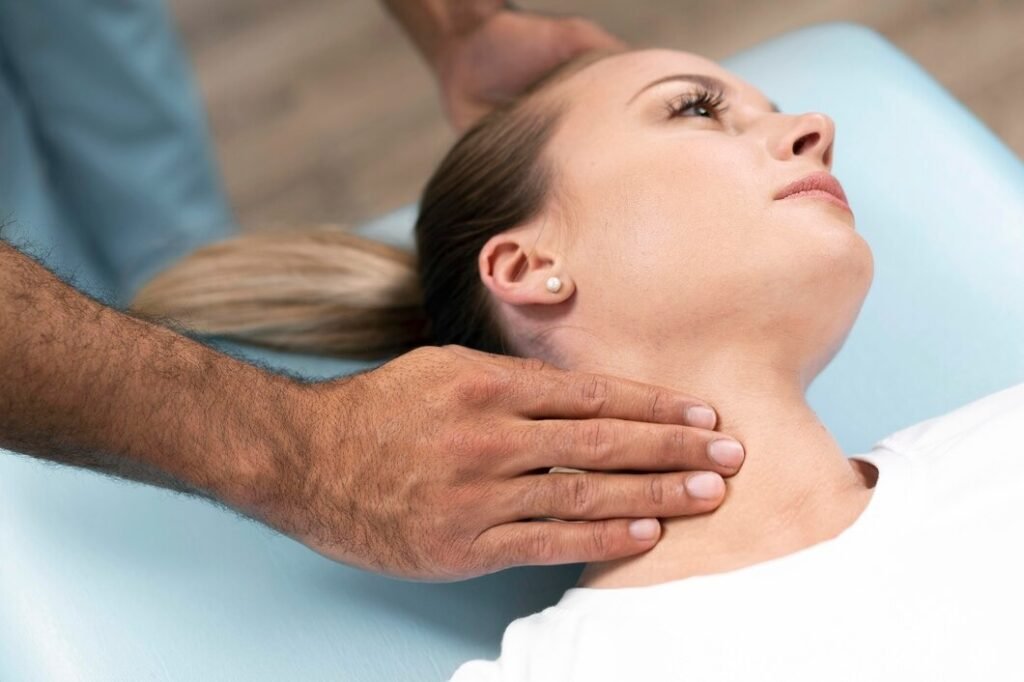
Walking into my first session, I expected something resembling massage therapy. Instead, I lay fully clothed on a table while the therapist placed a very light touch, seriously, feather-light, on my head and near the base of my spine.
At first, I wondered if anything was happening. But then I noticed something unexpected: my breathing started to deepen on its own, and I felt micro-releases, tiny adjustments, almost like a subtle unwinding, inside my jaw and neck.
At one point, the therapist’s hands were under my occipital area (the base of the skull), and I felt a wave of release that seemed to travel from the back of my head down into my jaw. It wasn’t dramatic, it was subtle, like untying a very small knot, but I could feel something letting go.
After that session, I didn’t feel “fixed,” but I noticed that my bite felt different. My jaw sat more naturally. When I drove home, I realized I wasn’t holding tension in my face like I usually did.
What Craniosacral Therapy Actually Does (in my experience)
For me, craniosacral therapy wasn’t just a muscle treatment, it was a nervous system treatment. It works on:
- The fascia and connective tissue around the jaw
- The cranial rhythm and subtle motility of cranial bones
- The trigeminal nerve (a major nerve affecting the jaw)
- The stress signals sent into the fight-or-flight response
- The tension patterns stored in the face and head
I began to think of jaw tension less as a “jaw problem” and more as a “nervous system overload symptom.” This was huge for me. When I changed my mindset, I stopped trying to force the jaw to relax and instead learned to invite relaxation through overall regulation of the system.
Releasing the Jaw from the Inside-Out
During later sessions, the therapist gently worked with areas that surprised me:
1. The sacrum (base of spine)
This had an indirect yet powerful effect on jaw tension. I learned that body stress patterns often connect along the spine, like tension highways.
2. The diaphragm region
When my breathing became less shallow, my jaw followed by relaxing spontaneously.
3. The temporal bones
These sit along the sides of the head where the jaw hinges. Adjusting their subtle motion helps balance the TM joint.
4. The mouth area (externally, no invasive work)
Just gentle holding around the cheeks, temples, and jaw line.
After a few sessions, I started to notice deeper changes:
- I was no longer grinding at night
- My jaw felt “light” instead of heavy
- My neck rotated more freely
- My shoulders dropped naturally
- Even my facial expressions softened
It truly felt like layers of tension were being peeled away.
The Emotional Component I Didn’t Expect
Craniosacral therapy brought something to the surface that surprised me: emotions stored in the jaw.
During one session, as the therapist held points around my temples, I suddenly felt a wave of sadness, not overwhelming, just noticeable. It wasn’t attached to a specific memory but felt like old emotional stress being let out.
The therapist explained gently:
“Sometimes the body holds what the mind doesn’t have time to process.”
That line stuck with me.
I started noticing patterns:
- When I suppress frustration, I clench.
- When I hold back words, I tighten.
- When I worry, I grind.
- When I try to “keep it together,” I lock the jaw.
As I released tension physically, I also became more aware of emotional expression, allowing myself to sigh, to speak, to yawn deeply, to relax the tongue and throat.
Practical Changes I Made Outside Therapy
Alongside craniosacral work, I made several daily adjustments that helped:
1. I practiced “jaw scanning.”
Every few hours, I ask:
“Is my jaw relaxed?”
Usually, it isn’t.
And I consciously let it drop.
2. I switched to nasal breathing as often as possible.
Mouth breathing tends to tense the jaw.
3. I stopped pushing my tongue upward unconsciously.
This was a huge hidden source of tension.
4. I became aware of micro-clenching.
Not obvious clenching, but tiny contractions while concentrating.
5. I changed my posture.
TMJ is heavily influenced by head-forward posture and computer-neck.
Over time, these habits retrained my system to stay neutral rather than braced.
Results After Several Months
After continuing sessions over the course of a few months, here’s what I noticed:
- Morning jaw stiffness reduced dramatically
- My TMJ popping became almost nonexistent
- I stopped grinding without trying
- I could open my mouth wider and without hesitation
- Headaches became infrequent rather than weekly
- My dentist commented on improvement in jaw function
But beyond the physical changes, I felt a deeper shift:
I stopped living in tension.
That may sound dramatic, but jaw tension had been a constant background hum, a silent, unrelenting pressure. When it eased, I felt mentally lighter, calmer, more present.
Why Craniosacral Therapy Works for TMJ (in my view)
From my personal perspective, craniosacral therapy works because it doesn’t fight the tension, it listens to it. Instead of pressing muscles until they surrender, it encourages them to release in their own timing.
TMJ pain isn’t just about mechanics. It’s about:
- stress regulation
- deep fascia patterns
- neural imbalance
- emotional holding
- cranial bone alignment
- autonomic nervous system tone
Craniosacral therapy addresses these foundational levels.
Advice I’d Give to Anyone Considering It
If you’re struggling with jaw pain, clenching, popping, or TMJ dysfunction, here’s what I’d suggest based on my personal experience:
- Go in with an open mind
- Don’t expect dramatic changes after one session
- Notice subtle shifts
- Pay attention to emotional release
- Support the process with daily jaw relaxation habits
- Drink lots of water afterward
- Be patient with your body
Most importantly:
Treat the jaw as part of a whole system, not an isolated hinge.
Final Thoughts
TMJ issues can feel frustratingly stubborn, especially when they don’t respond to traditional methods. But craniosacral therapy helped me in a gentle yet profound way by working with my nervous system rather than against it. It reminded me that healing doesn’t always require force, sometimes it requires subtle listening, soft attention, and a willingness to allow release rather than push it.
Today, my jaw feels natural, unforced, and aligned. I can speak, chew, rest, and breathe without the constant bracing that used to feel normal. Discovering craniosacral therapy was more than a physical treatment, it was a shift in how I relate to stress, emotion, and embodiment. I’m grateful I gave it a chance, and I truly believe it can be a meaningful approach for others experiencing the silent burden of jaw tension and TMJ issues.
Keep exploring expert-backed therapy and pain relief tips on MassageProGuide.
