

When it comes to pain relief, I’ve tried just about everything , stretching routines, foam rollers, Epsom salt baths, heating pads, cold therapy, and countless massages. But the two treatments that impact me the most , and the ones people constantly ask me about , are cupping and deep tissue massage. After experiencing both multiple times over the years, I’ve learned that while they may serve a similar purpose at a high level (reducing tension and pain), they’re actually very different in mechanism, sensation, recovery, and long-term effects.
I want to share what each session really feels like, how they affected my body, how fast I noticed results, and who I believe benefits more from one versus the other, based on personal experience combined with insights I’ve learned from therapists and practitioners.
What Deep Tissue Massage Feels Like For Me
Table of Contents
- 1 What Deep Tissue Massage Feels Like For Me
- 2 What Cupping Therapy Feels Like For Me
- 3 How Each Method Works – The Mechanisms
- 4 Pain Relief Comparison (What Worked Best for Me)
- 5 Recovery Time and After-Effects
- 6 Which Is More Comfortable?
- 7 Which Works Faster?
- 8 Long-Term Benefits I’ve Noticed
- 9 When I Choose Cupping vs. Deep Tissue
- 10 Conditions and Pain Types – What Each Relieves Best
- 11 Cost and Accessibility
- 12 So… Which Is Actually Better for Pain?
- 13 Listening to Your Body
When I get a deep tissue massage, I think of it as a slow but intense pressure therapy. The therapist digs into tight knots using knuckles, elbows, and forearms, and they follow the muscle lines to break up tension.
In my experience:
- It can feel uncomfortably intense at times
- It often produces that “hurts so good” sensation
- I sometimes feel soreness for 1–2 days afterward
- I feel physically “looser” afterward , muscles feel lengthened
Deep tissue works by compressing the muscles and generating friction, coaxing them into releasing tension. It feels like a sculpting of the muscle layers.
My personal results:
- Great for chronic stiffness
- Amazing for lower back tightness
- Effective for muscle knots and trigger points
- Really helpful when I’ve over-trained or lifted heavy
However, deep tissue massage can be tiring. After a session, I often feel like I’ve done a workout. Sometimes I need a nap.
What Cupping Therapy Feels Like For Me
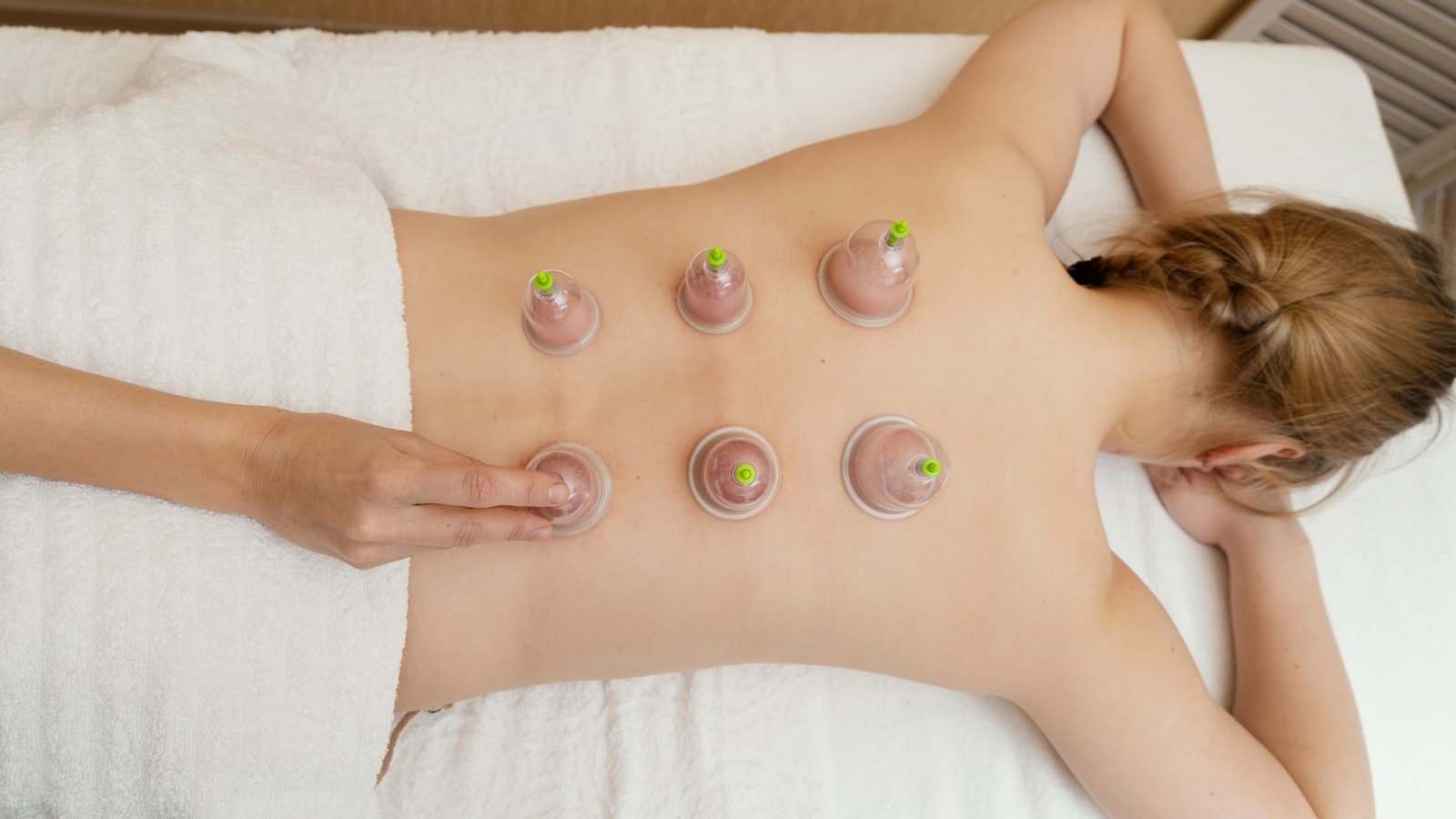
Cupping, on the other hand, surprised me the first time I tried it. I expected compression, but instead I felt suction , like something was pulling upward on my skin and underlying tissue. The cups create negative pressure, which is the opposite of massage. Instead of pressing down, they pull tissue up and away.
Sensations I feel during cupping:
- A strong suction at the start
- A dull stretching feeling under each cup
- Moments of intensity but less “sharp pain”
- A lightness in the area afterward , almost like the muscles are decompressed
Cupping has a distinct aftermath: the marks.
In my case:
- They’re not bruises, even though they look like them.
- They don’t hurt at all once the session is over.
- They fade from purple → red → yellow over about a week.
Interestingly, I noticed that the darker the marks were, the more stagnant the fascia and circulation had been in that area , or at least that’s how the practitioner explained it.
My personal results:
- Best for stagnant tension and “stuck” fascia
- Great for promoting blood flow
- Effective for mid-back or shoulder blade tightness
- Helpful for old injuries or slow-healing soreness
After cupping, I often feel immediate relief , sometimes more quickly than with deep tissue.
How Each Method Works – The Mechanisms
Here’s how I personally think about them after years of experiencing both:
Deep Tissue Massage
Pressure IN
Muscles are pressed and scraped into relaxation from the outside in.
Cupping
Pressure OUT
Suction lifts tissue upward, increasing circulation and encouraging release from the inside out.
One compresses.
The other decompresses.
This is why cupping can reach areas that massage sometimes struggles with , especially deeper fascia.
Pain Relief Comparison (What Worked Best for Me)
This is the ultimate question, what’s actually better for pain?
For sharp, specific pain from muscle knots:
Deep tissue massage worked better.
If I had a knot under my shoulder blade or a pin-point trigger spot in my lower back, deep tissue was more effective at getting in there and “melting” it.
For broad, diffused stiffness:
Cupping worked better.
For example, when my entire upper back felt tight after long periods of desk work, one cupping session felt like it opened up the whole region.
For athletic recovery:
Deep tissue massage helped more with muscle elasticity.
For circulation and detox-type relief:
Cupping had a bigger effect , I often felt clearer, looser, lighter.
For old injury areas:
Cupping felt gentler and more releasing, while deep tissue sometimes aggravated sensitive tissues.
Recovery Time and After-Effects
After Deep Tissue:
- Soreness lasting 1–2 days
- Occasional fatigue
- A gradual sense of improved flexibility over 48 hours
After Cupping:
- Immediate mobility increase
- Zero tenderness
- Dark circular marks that last 3–7 days
- A sense of “space” in the fascia
Deep tissue makes me feel like I need rest afterward.
Cupping makes me feel like I want to stretch and move.
Which Is More Comfortable?
For me:
- Deep tissue can be painful during the session
- Cupping looks dramatic after the session
But if we’re talking about discomfort:
- Deep tissue definitely feels more intense and sometimes borderline painful
- Cupping is easier to tolerate, though the suction can feel very strong
If I’m exhausted or fatigued, I prefer cupping because it requires less tolerance.
Which Works Faster?
If I want immediate mobility, cupping wins.
If I want deep muscular restructuring and long-term improvement, deep tissue wins.
Long-Term Benefits I’ve Noticed
Deep Tissue Massage:
- Improved posture over time
- Less re-tightening of muscles
- Enhanced flexibility
- Prevention of chronic knots
Cupping:
- Increased blood flow
- Reduced fascia stickiness
- Faster healing in sore areas
- Enhanced sensation of “openness” in the tissue
Honestly, they complement each other beautifully.
When I Choose Cupping vs. Deep Tissue
I choose cupping when:
- My back feels locked or stuck
- I have broad muscle tightness
- I need immediate relief
- I don’t want to feel sore for days
- I want a gentler session with fast results
I choose deep tissue when:
- I have a stubborn knot
- I feel restricted in a specific muscle
- I’ve been doing heavy lifting or athletics
- I’m okay with temporary soreness
- I need structural muscle work
Conditions and Pain Types – What Each Relieves Best
Based on what I’ve felt personally and learned from therapists:
Deep Tissue Massage Works Best For:
✔ Lower back knots
✔ Neck stiffness
✔ Shoulder impingement
✔ Trigger points
✔ Tight hamstrings or calves
Cupping Works Best For:
✔ Fascia tension
✔ Upper-back stagnation
✔ circulation issues
✔ slow-healing soreness
✔ muscle “deadness” sensation
✔ postural back tightness
Cost and Accessibility
Deep tissue massage is widely available , almost any massage therapist is trained in it.
Cupping, however, depends on having a practitioner who’s specifically trained in the therapy. It’s becoming more mainstream, but it’s still not as universally available as massage.
Cost varies, but in my experience:
- Deep tissue: slightly more expensive
- Cupping: often quicker and sometimes cheaper
So… Which Is Actually Better for Pain?
Here’s my honest conclusion after trying both for years:
Neither method is universally better , it depends entirely on the type of pain you have.
If you have tight muscles with knots, deep tissue is the winner.
If you have broad tightness and fascia restriction, cupping is the winner.
For me personally, I find that alternating them works best.
For example:
- One month: Deep tissue session
- Next month: Cupping session
Or even better , sometimes practitioners combine the two in a single appointment: deep tissue work followed by cupping.
That’s when I’ve had the BEST results.
Listening to Your Body
Over time, I’ve learned something important:
Pain is a messenger, not the enemy.
Deep tissue speaks the language of muscle manipulation.
Cupping speaks the language of circulatory stimulation.
Different pains respond to different approaches.
Whenever someone asks me, “Which should I do?”, I ask them:
- Is your pain sharp or broad?
- Is it muscular or fascial?
- Does it come from movement or stillness?
- Does pressing on it help , or make it worse?
Your own answers reveal which method your body prefers.
As someone who has dealt with recurring back tension for years, I can confidently say that both therapies have played a huge role in improving my pain, posture, mobility, and overall body awareness.
If you can, try both , observe your body’s reaction , and choose based on what truly brings your pain relief.
