

For most of my life, I thought muscle imbalance was just something athletes worried about, people who trained competitively or pushed their physical limits. I assumed that if I wasn’t doing extreme weightlifting or running marathons, my muscles should basically be balanced and functional. But over the years, I started noticing peculiar things: one shoulder always sat slightly higher than the other in photos, one hip felt tighter, one side of my back fatigued faster, and one calf did noticeably more work during certain movements. I shrugged it off for a while, but eventually I realized I wasn’t just imagining it, my body was operating unevenly.
That realization led me into the world of myofascial release, a technique that has fundamentally changed how I relate to my body, mobility, and overall sense of alignment. In this article, I want to share not just what I’ve learned, but how I’ve personally experienced the effects of myofascial release on addressing muscle imbalance and asymmetry. This is told from the perspective of someone who isn’t a physical therapist or doctor, just someone who has lived this, felt the difference, and done the work.
Recognizing My Muscle Imbalances
Table of Contents
- 1 Recognizing My Muscle Imbalances
- 2 Discovering the Role of Fascia
- 3 My First Experience with Myofascial Release
- 4 The Difference Between Stretching and Myofascial Release
- 5 How I Use Self-Myofascial Release at Home
- 6 Improvements I Have Personally Experienced
- 7 The Mind-Body Connection I Didn’t Expect
- 8 What I Now Believe About Asymmetry
- 9 Tips I Would Give to Anyone Considering Myofascial Release
- 10 A Continuing Journey
- 11 Final Thoughts
Before I understood what fascia even was, I was already feeling its consequences. For me, the worst imbalance showed up in three places:
- My right shoulder and upper trap were chronically tight, almost defensive, as though holding tension for years.
- My left hip flexor was much tighter than the right, causing a subtle tilt in my pelvis.
- My right calf and ankle were visibly stronger and more stable, while the left side felt weak and collapsed inward.
These imbalances weren’t dramatic enough for other people to notice, but I noticed them constantly. When I walked upstairs, I could feel the dominance shifting to one leg. When lifting grocery bags, I instinctively used my right arm. When standing in a mirror, I would tilt slightly without realizing it.
At first, I approached the problem like most people: I stretched the tight areas and tried to strengthen the weaker ones. It helped a little, but never fully corrected the underlying asymmetry. It always felt like I was applying surface-level fixes to a much deeper issue.
Discovering the Role of Fascia
Eventually, I learned about fascia, the web-like connective tissue that wraps around every muscle, tendon, organ, and bone. I read that fascia can tighten, shorten, and adhere in certain places, essentially “gluing” parts of the body into patterns of restriction.
When fascia tightens around certain muscles:
- It limits range of motion
- It creates compensatory movement patterns
- It alters posture
- It redistributes muscular effort unequally
Suddenly everything made sense.
It wasn’t that my muscles were just tight or weak, they were being held in certain positions by the fascial network. My right shoulder didn’t need constant stretching, it needed the surrounding fascia to release and soften.
That’s when I decided to seriously explore myofascial release as a therapeutic practice.
My First Experience with Myofascial Release
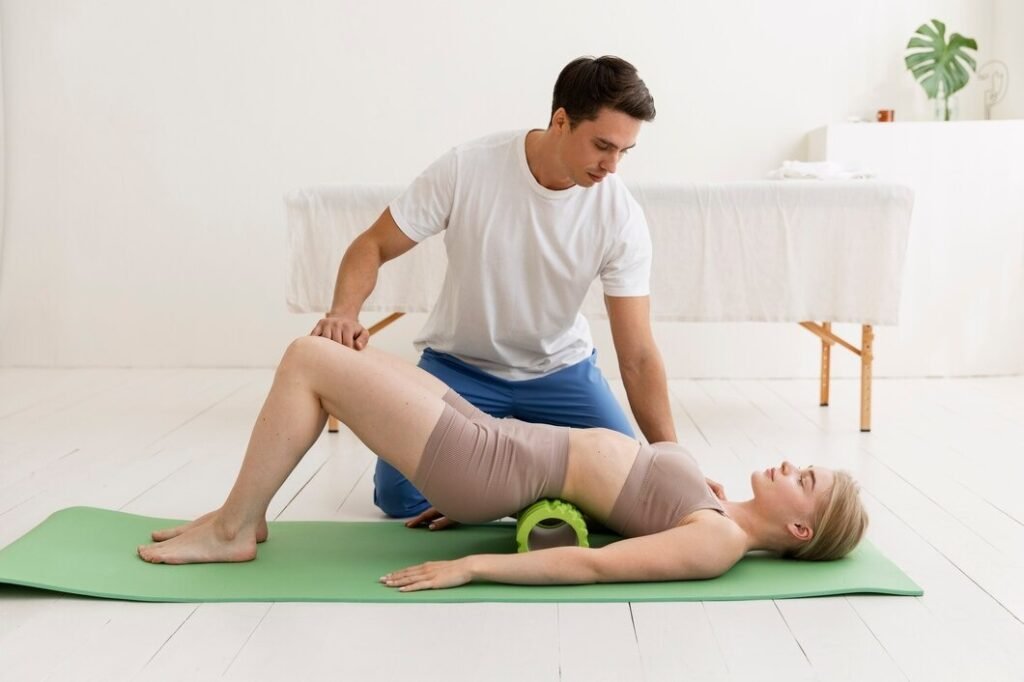
I booked a session with a practitioner who specialized in manual myofascial release. I didn’t know what to expect, I pictured deep, intense massage pressure, but that’s not what happened.
The technique was surprisingly gentle, almost still. There was sustained pressure held at certain points, almost like pressing into clay and waiting for it to soften. It took patience. It took breathing. It took trust.
I remember one moment specifically: the practitioner had their hand on the side of my rib cage, applying slow, steady pressure. After about thirty seconds, I felt something shift internally, a sliding, melting sensation, followed by an unexpected emotional release. I felt lighter, calmer, almost vulnerable, as if I had let go of something old and stuck.
By the end of the session, I wasn’t “fixed,” but something was undeniably different. My left hip felt freer. My posture felt more neutral. And the biggest change was the awareness I now had of my own fascial restrictions.
The Difference Between Stretching and Myofascial Release
I used to think stretching was enough. But myofascial release gave me a new perspective:
Stretching targets muscle tissue.
Myofascial release targets the connective tissue that surrounds it.
If the muscle is being constricted by tight fascia, simply stretching the muscle is like trying to inflate a balloon inside a tight plastic bag. You have to release the bag before the balloon can expand.
This shift in understanding transformed how I approached bodywork.
How I Use Self-Myofascial Release at Home
After seeing success with professional treatment, I incorporated self-myofascial release into my daily routine. Some of the tools I use include:
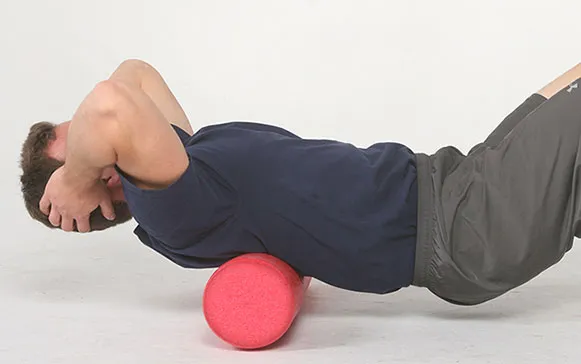
- A foam roller
- A lacrosse ball
- A massage ball with slight softness
- A long wooden dowel
- My hands and bodyweight
I focus mostly on slow, sustained pressure, not aggressive rolling or pounding. Some of my most effective personal techniques include:
Releasing the hip flexors and quads
I lie face-down with a ball under the front of my hip and breathe deeply. Over time, the tissue softens.
Opening the chest and shoulder fascia
I lean against a wall with a ball pressing into the pectoral, this helps correct the rotational asymmetry in my right shoulder.
Releasing the lateral calf and peroneals
This has helped rebalance strength between my right and left legs.
Working along the IT band and tensor fasciae latae
This area stores an extraordinary amount of tension related to pelvic asymmetry.
I’ve learned that patience is essential. With fascia, you don’t force anything, you wait for the tissue to respond.
Improvements I Have Personally Experienced
After months of consistent myofascial work, here are the changes I’ve noticed firsthand:
My posture is more symmetrical
I used to naturally stand with my left hip slightly rotated forward. Now, I feel much more aligned through the pelvis and spine.
My shoulder tension has decreased
My right shoulder is no longer chronically creeping upward. It sits naturally and comfortably.
Movement feels smoother
Instead of certain joints feeling “stuck,” I experience more fluidity. Movements like squatting, lunging, and reaching overhead feel effortless rather than restricted.
Strength is more balanced
When doing unilateral exercises, like single-leg squats or single-arm presses, I feel that both sides are finally sharing the load more evenly.
I experience fewer localized aches
Instead of pain accumulating in predictable hot spots, my body feels more integrated.
The Mind-Body Connection I Didn’t Expect
One of the surprises for me was the emotional aspect of fascia. I’ve experienced sessions where releasing a fascial layer brought up an unexpected emotional reaction, memories, sadness, frustration, or even laughter. It turns out fascia doesn’t only store physical history, it often also stores emotional tension and learned patterns of holding.
My practitioner once said to me:
“Your body remembers what your mind forgets.”
That feels true.
What I Now Believe About Asymmetry
I used to think muscle imbalance was something to fight against, that symmetry was the only correct state.
Now, I see asymmetry differently.
Some asymmetry is natural. We have a dominant hand, a stronger side, habitual postures, unique bone structures. The goal isn’t perfection, it’s functional, comfortable alignment that allows movement without pain or compensation.
Myofascial release helped me achieve that, not by forcing my body into symmetry, but by gently freeing it from restriction.
Tips I Would Give to Anyone Considering Myofascial Release
Based on my personal experience, here are a few insights:
- Go slow, this is not a rushed process.
- Don’t use pain as a gauge of effectiveness.
- Breathe into the areas of tension.
- Start with larger muscle groups before fine-tuning smaller ones.
- Be consistent, progress compounds over time.
- Listen to your body and be curious rather than judgmental.
A Continuing Journey
Myofascial release didn’t “fix me” in one session, or even ten. It’s become a practice, a form of maintenance, and a language for communicating with my body.
I now understand that when one side tightens, something in my fascia is reacting to stress, posture, or movement. I don’t get frustrated with the tightness, I work with it.
In truth, this journey has made me feel more connected to my physical form than ever before. Instead of ignoring signals of imbalance, I respond to them. Instead of enduring tension, I explore it. And instead of treating my body like a machine, I treat it like a living, adaptive system.
Want to learn how Myofascial Release helps chronic pain sufferers? Check it out now on MassageProGuide!
Final Thoughts
Myofascial release has given me a deeper, more intuitive awareness of my muscle imbalances and asymmetry. It has restored mobility where I lost it, created balance where I lacked it, and instilled confidence in how I move and inhabit my body.
I share this not as medical advice, but as lived experience. This technique has become one of the most powerful tools in my self-care and body-awareness toolkit, and I genuinely encourage anyone struggling with uneven tightness, mobility restrictions, or persistent tension to explore it.
If you’re feeling imbalanced or asymmetrical, whether in posture, strength, or comfort, myofascial release might just be the missing puzzle piece.
