


I’ve struggled with lower back pain and sciatica on and off for years, and I know firsthand how frustrating and limiting it can feel. Mine started as a dull ache after long hours of sitting, but over time it progressed into a sharp, radiating pain that shot down my leg and made even the simplest motion , like tying my shoes , a challenge. I tried painkillers, stretching routines, heating pads, yoga, and even chiropractic adjustments. Some of these helped temporarily, but the pain always came back.
That’s when I discovered something I had never really paid attention to before: myofascial release. I had heard the term floating around in wellness circles, but I didn’t truly understand what it meant or how it worked. Today, after experiencing significant improvement from it, I can honestly say that myofascial release has had one of the biggest positive impacts on my back health and mobility.
In this article, I want to share exactly how it helped me, the techniques I use, what I learned about fascia, and what I wish I had known from the beginning.
How I Learned That My Pain Wasn’t Just “Muscular”
Table of Contents
- 1 How I Learned That My Pain Wasn’t Just “Muscular”
- 2 My First Experience with a Myofascial Release Session
- 3 The Techniques I Use Now
- 4 Why Myofascial Release Helped My Sciatica
- 5 The Surprising Emotional Connection
- 6 What My Pain Taught Me About My Body
- 7 Making Myofascial Release Part of My Routine
- 8 My Advice to Anyone Experiencing Sciatica or Lower Back Pain
- 9 Results I’ve Experienced Over Time
- 10 Final Thoughts
At first, I assumed my sciatica and lower back discomfort were purely muscular , maybe my hamstrings were too tight or my lower back muscles were strained. That’s what most generic back-pain advice tells you. But as I started learning about myofascial release, I discovered something eye-opening:
My pain might have been rooted not just in muscles, but in fascia, the thin layer of connective tissue that encases and binds all the muscles in the body.
One practitioner described fascia to me like this:
“If your body were an orange, the fascia would be the thin white membrane between segments.”
When fascia gets tight, knotted, or “stuck,” it can restrict movement and create pain , even in areas farther away from where the actual tension originates. For me, tightness in my piriformis muscle and hip fascia was pulling on the lower back, aggravating my sciatic nerve.
This was the first time anyone had explained why stretching alone hadn’t fixed anything. I needed to release the fascia, not just relax the muscles.
My First Experience with a Myofascial Release Session
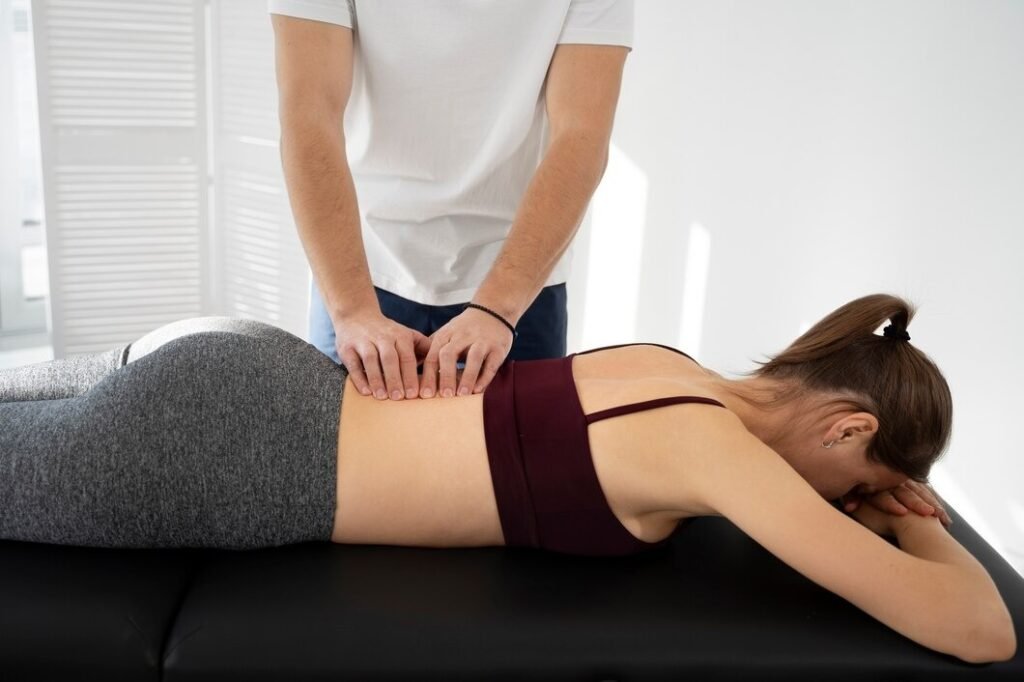
When I booked my first professional myofascial release treatment, I expected something aggressive or intense , like deep tissue massage. Instead, the therapist used slow, sustained pressure and gentle manipulations. At first, it felt like almost nothing was happening… and then it kicked in.
Instead of brute force pressure, the therapist held stretches and tractioning motions for a surprisingly long time , sometimes 1–3 minutes. I learned that fascia responds to prolonged contact and melting-type pressure rather than fast kneading.
During the session, I noticed something interesting: I could actually feel certain areas “unwinding” or softening. It wasn’t instant relief, but it definitely shifted something within my hips and lower back.
Later that evening, I stood up from the couch , normally the moment when a stab of sciatica hit , and realized I felt noticeably lighter and freer. It wasn’t a miracle cure after one session, but it was the first real and lasting improvement I had felt in months.
The Techniques I Use Now
Over time, I learned several myofascial release techniques I could do myself at home. These became part of my routine and, honestly, changed the way I think about pain management.
1. Foam Rolling Glutes & Piriformis
Instead of rolling quickly, I learned to:
- Place the foam roller under the glute
- Cross one leg over the other
- Roll slowly until I find a tender spot
- Rest on it with steady pressure for 60–90 seconds
I had always rolled too fast. Letting the fascia “melt” slowly made a world of difference.
2. Lacrosse Ball Targeting
I use a lacrosse ball on the:
- lower back muscles
- sacrum area
- back of the hip
- the deep glute attachments
Sometimes I lean against the wall instead of the floor for more control.
3. Hip Flexor Fascial Release
This one was huge for me.
So much of my lower back tension came from tight hip flexors pulling forward on the pelvis. Using slow release pressure along the front of the hip helped relieve that structural tug-of-war.
4. Fascia-Stretching vs Muscle-Stretching
I learned that with fascia, long-duration stretching works best:
- 2–5 minutes per position
- no bouncing
- very gentle intensity
This was different from the typical 15-second muscle stretch I used to do. The fascia needs time and patience.
Why Myofascial Release Helped My Sciatica
Sciatica pain usually happens because something is compressing or irritating the sciatic nerve. Traditional sciatica advice focuses on:
- stretching hamstrings
- strengthening core
- adjusting posture
These helped somewhat, but never deeply.
Myofascial release helped because it:
✦ Reduced tension around the sciatic nerve path
By releasing the fascia around my piriformis and glute muscles, I decreased the constriction on the nerve.
✦ Improved alignment and movement
With fascia restrictions gone, my pelvis began moving more freely and naturally.
✦ Increased circulation
Better blood flow helped reduce inflammation.
Tension in my calves and hips , not just my back , contributed to the pain.
The Surprising Emotional Connection
One thing I didn’t expect was the emotional component.
My therapist told me that fascia can actually store stress and emotional tension. When certain areas released, I unexpectedly felt a wave of relaxation , almost like emotional pressure was dissolving along with the physical stiffness.
This felt especially true in the hips , which some say is the body’s “emotional storage vault.” Whether or not that’s scientifically proven, I personally felt the difference.
What My Pain Taught Me About My Body
Before myofascial release, I blamed my back.
I thought:
- “My lower back is weak.”
- “My discs must be compressed.”
- “My hamstrings are just overly tight.”
Now I recognize that pain is often a message, not a malfunction.
The problem wasn’t just in the pain location , it was in structural imbalances and fascial restrictions all over my lower body.
I discovered that:
- my hip on one side was tighter than the other
- my quads were pulling my pelvis forward
- my calves were affecting hamstring tension
- my posture was subtly imbalanced
It was a systemic issue , not an isolated one.
Making Myofascial Release Part of My Routine
Now, I do a series of myofascial practices several times a week:
Morning
- gentle hip fascia stretch
- psoas relaxation
- calf & hamstring decompression
After long sitting
- glute and hip ball release
- lower back traction
Before bed
- slow stretching
- breathing to relax fascia
It only takes about 10–15 minutes, but I wake up with far less stiffness and rarely experience the sciatic shooting pain anymore.
My Advice to Anyone Experiencing Sciatica or Lower Back Pain
If you’re dealing with sciatica or back tightness, here’s what I wish someone had told me earlier:
- Don’t assume the pain is coming from where you feel it.
The source might be elsewhere , especially in the hips. - Don’t rush the release process.
Fascia responds to time, not force. - Your body is interconnected.
A tight foot arch can affect a hip.
A tight hip can affect the back.
The back can affect the leg. - Pain isn’t a failure , it’s a signal.
Listen to it instead of numbing it. - Consistency beats intensity.
Short, frequent sessions create more change than occasional intense efforts.
Results I’ve Experienced Over Time
Today, I can sit longer with less discomfort. I can bend down without bracing for pain. I can get up from bed or from the car without wincing. The shooting nerve pain down my leg is almost completely gone, and even when it occasionally comes back, I now know how to address it before it becomes debilitating.
My posture is better, my pelvis feels more balanced, my hips are more mobile, and the tension that once felt constant in my lower back is dramatically reduced.
Final Thoughts
Myofascial release didn’t just give me physical relief , it gave me a new relationship with my body. I now respect the role fascia plays, and I see how treating the body as a connected system creates deeper healing than just focusing on muscles or joints in isolation.
If you’re struggling with sciatica or chronic lower back pain, I truly encourage you to explore myofascial work , whether with a professional or through guided self-release techniques. It has the power to not just reduce pain, but also restore movement, improve body awareness, and help you reconnect with a sense of ease in your own body.
For me, it was the turning point , the moment I stopped just “managing” back pain and started genuinely healing it.
For trusted tips on lower back pain relief, keep following MassageProGuide.
