

When I first began practicing massage therapy, I treated every body on the table with the same fundamental intention , to ease tension, reduce discomfort, and create a sense of deep relaxation. But as more expecting mothers began seeking my services, I quickly learned that prenatal massage is an entirely different practice , one that requires specialized knowledge, sensitivity, and technique. Over time, I’ve come to appreciate the meaningful, almost sacred differences between prenatal massage and regular massage. Today, I want to share those key distinctions from my personal perspective, both as a trained therapist and as someone who deeply values the nurturing aspect of this work.
My Initial Understanding , and What I Got Wrong
Table of Contents
- 1 My Initial Understanding , and What I Got Wrong
- 2 Positioning: The Most Visible Difference
- 3 Pressure: It’s Still Therapeutic, But Not the Same
- 4 Understanding the Pregnant Body: Hormones, Joints, and Fluid Retention
- 5 Emotional Component: What I Feel While Working
- 6 Focus Areas: Different Priorities for Different Bodies
- 7 Conversation and Comfort: What Clients Need to Hear
- 8 Safety Protocols: The Non-Negotiables
- 9 Benefits: Both Types of Massage Are Valuable , But in Different Ways
- 10 What I Feel After Giving Each Type of Massage
- 11 Final Thoughts
Early in my career, I assumed that a massage was a massage , I simply needed to adjust pressure and be a bit more gentle when working with pregnant clients. But that naïve assumption didn’t last long. I quickly discovered that prenatal massage isn’t simply a “lighter version” of regular massage. It’s a specialized form of bodywork designed to support a body undergoing extraordinary changes , postural shifts, hormonal fluctuations, circulatory adaptations, joint loosening, and emotional sensitivity.
Once I invested in prenatal-specific training and hands-on experience, I began to understand what expecting clients truly need , and the power of giving them a safe, appropriate, and nurturing therapeutic experience.
Positioning: The Most Visible Difference
During a typical regular massage session, I ask clients to lie face-down and face-up, often with minimal bolstering. The table positioning is straightforward , the goal is maximum access to the musculature.
For pregnant clients, especially after the first trimester, positioning becomes one of the most critical aspects of the session. Lying flat on the stomach isn’t appropriate past a certain point of pregnancy, and lying flat on the back isn’t ideal after around 20 weeks due to compression of the vena cava , a major blood vessel that can restrict circulation to the heart.
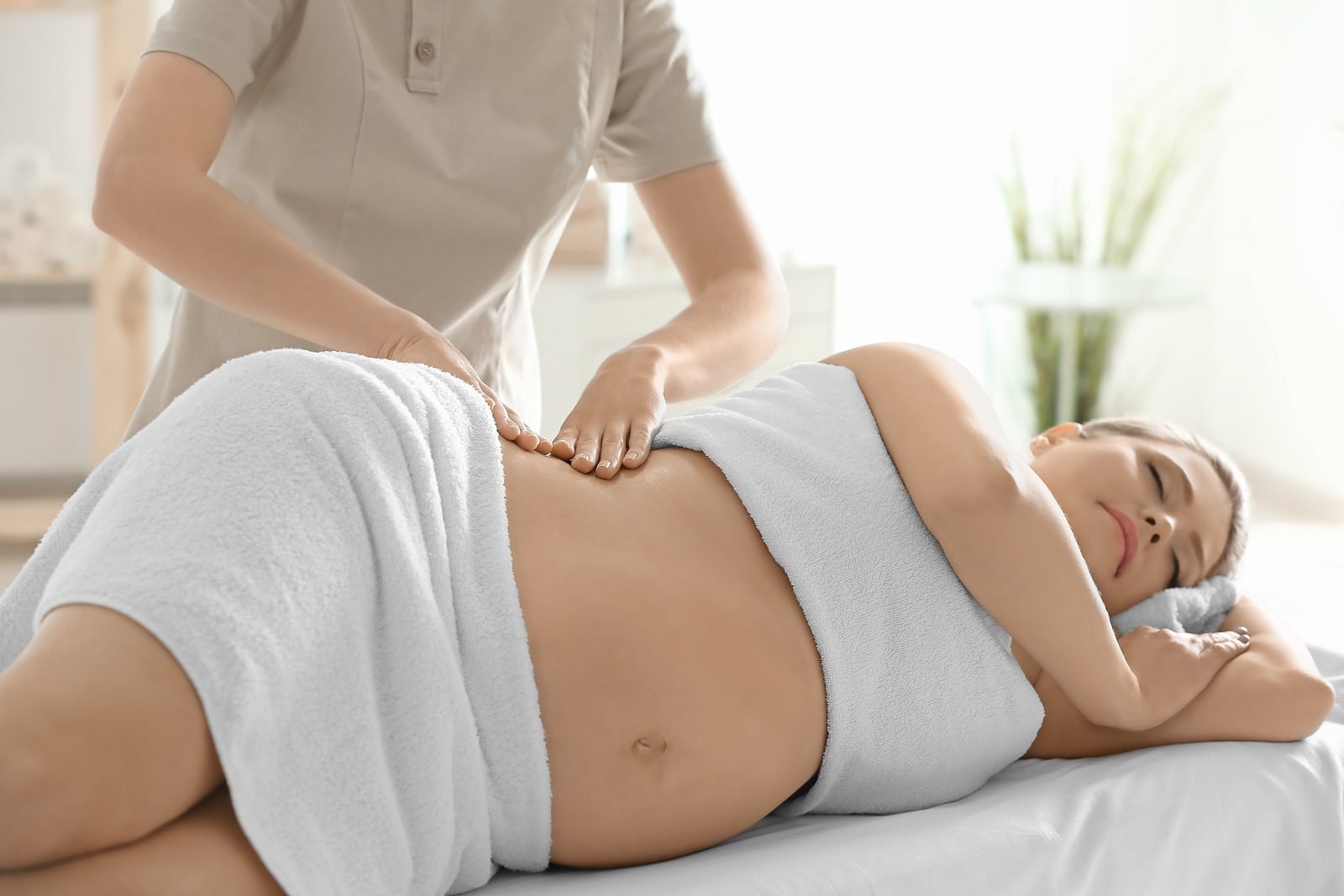
During prenatal massage, I position the client in a comfortable side-lying posture using pillows, bolsters, and padding that support the belly, knees, ankles, and back. This allows for proper circulation, reduces strain, and ensures that both mother and baby remain comfortable and safe. I’ve had expecting clients tell me that the side-lying setup is the most physically supported they’ve felt anywhere , even more comfortable than sleeping.
That’s when I realized , positioning is not just about access for me. It’s about comfort and security for them.
Pressure: It’s Still Therapeutic, But Not the Same
Many people who come to me for a regular massage want deep pressure. They say things like:
- “Dig into that shoulder blade.”
- “Go hard on my back , I can handle it.”
- “I want to feel this tomorrow.”
With prenatal massage, pressure must be used very intentionally. While I can still work deeply in certain areas like the shoulders and upper back, I avoid deep pressure on the legs , especially the calves , because pregnancy increases the risk of blood clots. The circulatory system is already under more stress due to increased blood volume, and deep leg manipulation could potentially dislodge a clot.
So I approach prenatal pressure differently:
- More nurturing, rhythmic strokes
- Gentle myofascial release
- Gradual muscle coaxing rather than force
- Focused attention on safe areas
- Listening closely to both verbal and non-verbal feedback
I’ve learned that prenatal massage isn’t about force , it’s about thoughtful intention.
Understanding the Pregnant Body: Hormones, Joints, and Fluid Retention
When I work with someone who isn’t pregnant, their muscular tension is often the result of posture, stress, work strain, athletic activity, or daily lifestyle habits.
With pregnant clients, the sources of physical discomfort are vastly different. The body is preparing for childbirth , whether the person consciously feels it or not.
Relaxin, for example , a hormone that increases during pregnancy , loosens ligaments to make space for a growing baby and prepare for delivery. Because of this ligament laxity, the joints are more vulnerable and the body is less stable. It becomes critical for me to avoid stretching or pulling joints beyond a safe range.
There’s also fluid retention , swelling in the feet, hands, and ankles. Instead of deep pressure, I use gentle strokes that encourage fluid movement toward the lymphatic pathways.
Each pregnant body tells a different story, and I’ve learned to read that story through sensation, sensitivity, swelling patterns, and posture.
Emotional Component: What I Feel While Working
Regular massage is often transactional:
You come in with stiffness or stress, I work on the muscles, and you walk out feeling better.
Prenatal massage feels more relational, more tender. I often experience a sense of shared nurturing , not just of the mother, but indirectly of the child as well.
I’ve had mothers open up on the table and say:
- “I haven’t felt like myself lately.”
- “I haven’t been able to sleep comfortably in weeks.”
- “I’m anxious about the birth.”
- “My back is killing me , I just need relief.”
These aren’t just physical needs. These are emotional ones.
With prenatal massage, I’m not just treating muscles , I’m creating a space of grounding, safety, and reassurance.
Focus Areas: Different Priorities for Different Bodies
Regular Massage:
I typically focus on:
- shoulders
- neck
- back
- hips
- arms
- legs
Prenatal Massage:
I find myself working more with:
- lower back tension due to changing posture
- hips and glutes supporting pelvic expansion
- ribcage discomfort due to breathing changes
- swelling in feet and ankles
- shoulder and neck tension from breast weight and postural shift
I also avoid certain points, such as strong stimulation of the inner and outer ankles and specific points in the hands , which according to some traditions and cautionary guidelines may stimulate uterine activity.
Conversation and Comfort: What Clients Need to Hear
I never assume what a pregnant client is dealing with. I always ask guiding questions:
- “Where are you feeling discomfort today?”
- “Has anything changed since your last massage?”
- “Are there any areas you want me to avoid?”
- “How far along are you now?”
And most importantly,
- “Tell me if anything doesn’t feel right.”
I’ve noticed that expecting mothers often apologize for adjusting positions, clearing their throat, needing to pee mid-session, or asking for pillow adjustments. I always reassure them ,
“You are not inconveniencing me. Your comfort is the entire point of the massage.”
That honesty helps replace self-consciousness with ease.
Safety Protocols: The Non-Negotiables
Regular massage requires general anatomical and physiological awareness. Prenatal massage requires deeper layers of safety knowledge.
For example, I avoid:
- deep abdominal work
- prone positioning after the first trimester
- deep pressure on the legs
- heat therapies on the abdomen
- any aggressive stretching
I also always ask:
- “Have you had any medical complications?”
- “Is your pregnancy considered high-risk?”
- “Have you spoken with your healthcare provider about massage?”
These questions aren’t intrusive , they’re important.
Benefits: Both Types of Massage Are Valuable , But in Different Ways
What clients gain from regular massage:
- release of muscular knots
- improved flexibility
- stress reduction
- improved posture
- faster athletic recovery
What clients gain from prenatal massage:
- reduced back and hip pain
- relief from sciatica
- improved sleep
- decreased swelling
- emotional comfort
- improved circulation
- reduction in stress hormones
- a sense of being cared for
One is therapeutic through structural release.
The other is therapeutic through supported transformation.
What I Feel After Giving Each Type of Massage
After a regular massage, I often feel like I’ve just completed a satisfying physical task , a session where I helped unravel muscular stress.
After a prenatal massage, I feel like I’ve contributed to something bigger , like I’ve helped someone through a unique chapter of life.
I’ve had expecting clients come back to me weeks later and say:
- “Your sessions helped me sleep better than anything else.”
- “I felt human again after that massage.”
- “That was the first time in months my body didn’t feel heavy.”
That’s when I’m reminded of the deeper purpose of prenatal massage , it’s not just treatment. It’s comfort, compassion, and connection.
Final Thoughts
After years of working with both pregnant and non-pregnant bodies, I’ve learned that prenatal massage and regular massage share a common root , intentional human touch , but they diverge in purpose, technique, and emotional depth.
Prenatal massage acknowledges that the body is in transition , that a new life is forming, that internal structures are shifting, that emotions may be heightened, and that comfort becomes not a luxury, but a necessity.
Regular massage is restorative.
Prenatal massage is nurturing.
And as a practitioner, I feel honored every time I’m invited into that nurturing space.
